

Electric vac pump for wipers
You can run vacuum wipers with a small vacuum pump. You don’t need as much vacuum as power brakes. I suggest a vacuum storage canister between the pump and wiper motor for smoother operation.
Some have tried using the little $25-30 vac pumps found on Amazon (on left). Main use is for lab equipment. They pull enough vacuum, but lack volume for wiper motors.
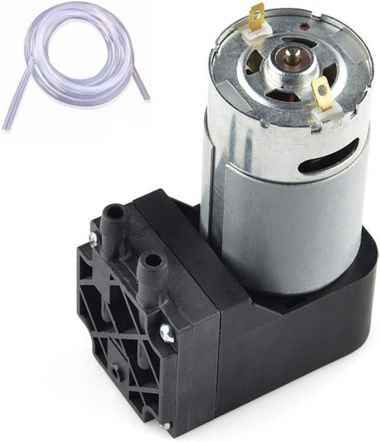
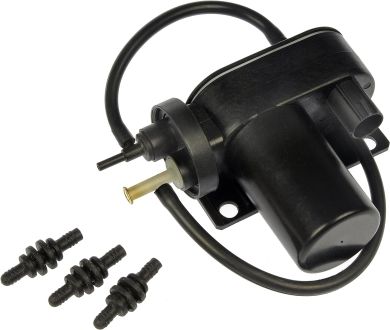
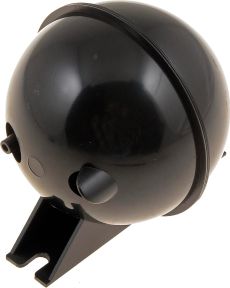
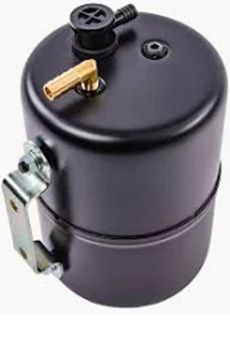
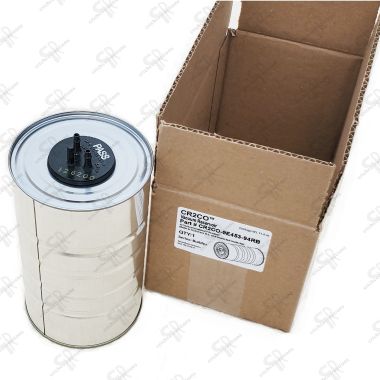
The vac pumps used for vehicle controls work better. I know of one person who reported good results using a Dorman 904-214 (Dodge/Ford replacement, above on right) with a large reservoir. These are used mainly to operate HVAC and other controls. The “ball” reservoir below is a Dorman 47076 and should be adequate (about 1L – $20-30). The one on the right is a Jegs 63010 and is better (about 2L – $40) – Summit SUM-G1464 is similar. Reproductions of the Ford “juice can” (also about 2L – ½ gallon) part number D5TZ-9E453-A are available on E-bay and at some Ford parts vendors, but it’s kind of expensive — best price I found on E-bay for a new repro (unpainted – shown) was $80 + shipping! On the plus side it has a built in check valve assembly.
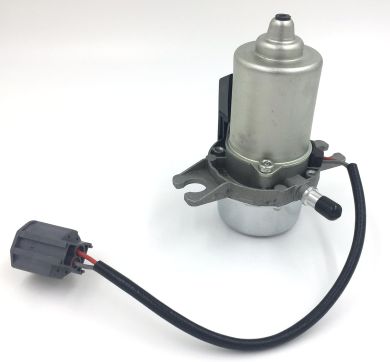
One of these pumps (below) might be best — made for brakes, but not expensive like most aftermarket types since they are an OEM replacement part. You might want to check salvage yards after looking at the product description (various 2006-2013 Volvo and GM models). Search for “Power Brake Booster Vacuum Pump Assembly 20804130 31317530”. It can be found on Amazon for $40-$112, depending on source.
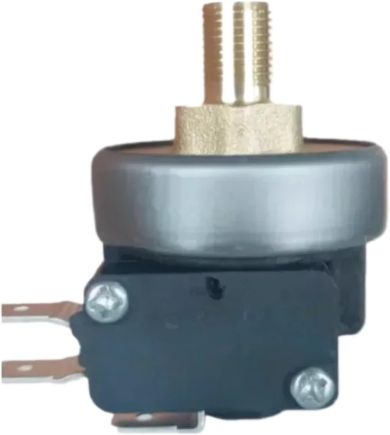
Use a relay rather than wire a dash switch directly to the vacuum pump. That lengthens the life of the switch and lighter gauge wiring (#14 stranded) can be used under the dash. There will be very little current through the switch wiring as it’s only activating the relay. You may want a vacuum switch on the pump relay so that the canister is kept at about 15” HG (~51 kPa), especially if you use a large canister. That will turn the pump off once the canister reaches that amount even with the switch on. The dash control for the vacuum wiper motor is still used, so the switch will save your battery if you forget to turn it off. Running the wipers at a low speed may not need the pump to run continuously. The switches are cheap ($15-$20) on Amazon. Search for “G1/4 G1/8 Vacuum Pressure Switch”. They are typically adjustable in the -10 to -90 kPa range (~3-26 in HG). You could wire the motor to switch power and not use a toggle switch if you use a vacuum switch. It will be like your shop air compressor and run occasionally, but if the hoses and check valves are sealed and working that shouldn’t be a big issue, it shouldn’t run much at all.
Note that most people having trouble with these switches don’t know how to use it! There is a screw in the vacuum fitting that is turned in/out to adjust pressure, much like a transmission vacuum modulator (at least on older GMs). It’s inconvenient, you have to remove the vacuum line, adjust, then run the pump to see when it turns off, repeat… but it works. One of the three terminals is a ground, the other two break the lead to the pump relay.
You may also need a check valve or in the vacuum line to prevent leaking. One between pump and canister, another between canister and wiper motor. A Dorman 47170 is a 5/16” check valve. They run around $10 or less. Search Amazon for “5/16” vacuum check valve” and you’ll find many for around $10 in two packs. Valves listed for fuel and water can be used for vacuum also.
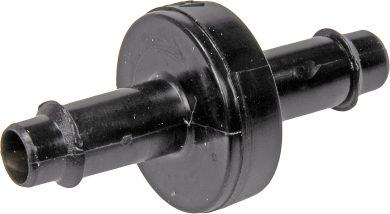
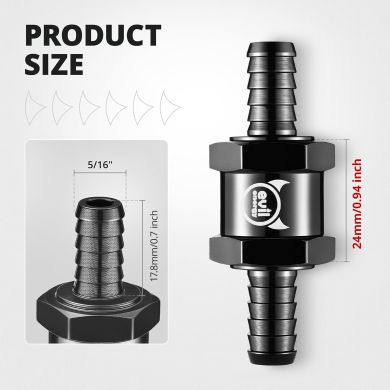
Dorman 47170 Check Valve Evil Energy Check Valve
($15.61 two pack, Amazon, June 2026) ($10.49 two pack, Amazon, June 2026)
Don’t use engine vacuum. Mount the motor using rubber grommets or some other anti-vibration mounts. If mounted solid it will be loud! Run a vacuum line (fuel line may work better – it’s stronger and won’t suck shut) from the pump to the canister with a check valve between. Remember, the vacuum pump is “sucking” through the line, so suck on the line going to the pump once the check valve is in to make sure it’s in the right way. You might want to use a syringe or hand vacuum pump, but I usually just suck on a clean, new hose. Then run to the canister. On the outlet of the canister run a length of hose, the vacuum switch (you may need a T in the line), then the check valve, and finally to the wiper motor. It may take 3-5 seconds for the motor to “fill” the canister and the wipers to start working at full speed.
Wiring a relay is pretty easy. On a common four pin automotive relay pin 85 is connected to ground. Pin 86 is connected to power through first the switch then through the vacuum switch. This way as long as there is less than 15 in HG (or whatever the switch was set to) in the canister the pump will run. Relay pin 30 connects to the positive battery terminal through a 15A fuse. Pin 87 connects to the positive lead of the pump. Connect the pump negative lead to a good ground.
One of these and a rebuilt vacuum wiper motor is all you need to have reliable vacuum wipers. 60+ year old wiper motors are either worn out or “aged out” (dried grease and cracked seals) and simply can’t be revived to be strong and reliable. Spraying oil in them or even disassembling and cleaning/greasing may help short term, but it won’t be nearly as strong as a rebuilt one. I’ve tried all the tricks over the years, it’s really not worth the effort – get a rebuilt motor!
I haven’t done mine yet, but will be keeping the vacuum wipers in my 61 American resto-mod and running an electric pump and storage canister. I’ll be doing it as I described above, just the electric vacuum pump (I plan on the GM pump), storage canister, vacuum switch set at 15” Hg, and check valves. I haven’t decided on wiring yet. I’ll probably wire it to switched power but run a toggle in between power and the pump so I can turn it off if I want but can also leave it on. That sounds like the smart thing to do… If you’re running one of the pumps mentioned please let me know if it’s working well and how you have it wired. I will add that info to this article to help others.