

Written by Tom Jennings 12-03-2023, edited by Frank Swygert 06-12-2026
The cooling system for the 195.6 OHV is adequate and of conventional design (1957 is the last year the water pump was driven from the rear of the generator).
This engine is very sensitive to overheating. Under no circumstances allow this engine to overheat. AMC was pretty casual about defining “overheat”, the TSM considers temperatures up to 240 F or so as “normal”, but in my experience with this engine inability to hold the coolant to “thermostat” temperature plus or minus 10 degrees (185-205 F) indicates a problem. It’s just not hard to make it right.
My definition of “overheat” is more than 5 degrees over thermostat temperature. In other words, out of regulation. The cooling system is designed to regulate to a constant temperature. Engine (carburetor) state of tune requires a constant temperature to stay in tune. My cars achieve this routinely with no special equipment or modifications.
AMC specifies a thermostat temperature of 190 F or 195 F, flathead or OHV, all years. The engine operates best — and the cooling system regulates best — at this temperature. There is no scientific reason to run a 160 F or 180 F thermostat — it won’t do what you think — and no thermostat at all is just foolish. Physics is physics.
If you run this engine hard — sustained operation at/over 3000 rpm — oil cooling becomes an issue. The relatively huge crankshaft journals do a good job of heating the oil at high speeds. Please refer to the lubrication section for discussion.
Problems and solutions
Most cooling system problems on this engine stem from advanced age and lack of maintenance, accumulated during it’s lifetime. Additionally, radiators were barely adequate, cooling fans comically ineffective, and for whatever reason there seems to be great resistance in old-car culture to springing the bucks for a decent radiator.
The problem fixes on this page are reliability increasing and secondarily performance increasing, in that you can run the engine at moderate and high sustained loads (eg. freeway driving) without overheat.
The stock type two-row brass radiator is probably not adequate for modern use. It is definitely not adequate for “parade” use, extended low-speed driving — the small fan is nearly useless in those conditions, it simply doesn’t move enough air for extended low speed driving (parades or stuck in traffic). A radiator is only as good as the airflow through it. This is physics and not amenable to arguments about past practices.
In 1964 AMC incorporated changes to water pump and head design that solves the thermostat-placement problem. But given how much engine and parts-swapping was done in these engine’s long lifetimes, it wouldn’t hurt to understand what you have installed.
A design flaw in the cylinder head, outlined in detail below, is responsible for many of the reliability complaints about this engine. This problem has two fixes, one of which is do-it-at-home simple. This fix should be applied to even driven-once-a-month cars, unless they are 1964 and up. Even if you have a 1964-up engine, you might want to look at and understand the second fix for pre-1964 engines. That fix would allow you to run the earlier, more common water pump on the later engine.
Basic cooling system operation
The cooling system is quite ordinary. The belt-driven pump draws coolant from the bottom of the radiator, pushes it into the front of the block, where it flows past and around all six cylinders picking up heat, then flows upwards through passages into the cylinder head, then out the top-front. The thermostat is placed in the outlet to the radiator where the coolant is hottest. Air in the system (e.g. missing coolant!) collects in the top of the radiator. Pulling from the bottom of the radiator makes the pump self-priming (as long as the coolant level is above the pump’s vanes).
Thermally, this is a closed loop system. The firing cylinders produce a lot of waste heat, mostly in the head. There is a loose synergy between engine RPM and cooling system operation, where “more” heat is produced at higher RPMs, when, through no coincidence, the coolant pump is spun the fastest and moves the most coolant (greater cooling capacity). Assuming that the car is moving, there is simultaneously maximum air flowing through the radiator, helped and sometimes hindered by the fan on the front of the pump.
Since coolant flows from bottom to top, and the combustion chamber water jackets in the head produce most of the heat, the thermostat is located after the hottest part of the engine. The thermostat is a proportional valve, a restriction to coolant flow. It varies from closed to mostly open, depending on the temperature of a little blob of wax inside it. The rated temperature is the temperature at which it just begins to open.
updated 03 Dec 2023
The cooling system for the 195.6 OHV is adequate and of conventional design (1958 is the last year the water pump was driven from the rear of the generator).
This engine is very sensitive to overheating. Under no circumstances allow this engine to overheat. AMC was pretty casual about defining “overheat”, the TSM considers temperatures up to 240 F or so as “normal” but in my experience with this engine, inability to hold the coolant to “thermostat” temperature plus or minus 10 degrees indicates a problem. It’s just not hard to make it right.
My definition of “overheat” is more than 5 degrees over thermostat temperature. In otherwords, out of regulation. The cooling system is designed to regulate to a constant temperature. Engine (carburetor) state of tune requires a constant temperature to stay in tune. My cars acheive this routinely with no special equipment or modifications.
AMC specifies a thermostat temperature of 190 F or 195 F, flathead or OHV, all years. The engine operates best — and the cooling system regulates best — at this temperature. There is no scientific reason to run a 160 F thermostat — it won’t do what you think — and no thermostat at all is just foolish. Physics is physics.
If you run this engine hard, sustained operation at/over 3000 rpm, oil cooling becomes an issue. The relatively huge crankshaft journals do a good job of heating the oil at high speeds. Please refer to the lubrication section for discussion.
Problems and solutions
Most cooling system problems on this engine stem from advanced age and lack of maintenance, accumulated during it’s lifetime. Additionally, radiators were barely adequate, cooling fans comically ineffective, and for whatever reason there seems to be great resistance in old-car culture to springing the bucks for a decent radiator.
The problem fixes on this page are reliability increasing. And secondarily performance increasing, in that you can run the engine at moderate and high sustained loads (eg. freeway driving) without overheat.
The stock type two-row brass radiator is probably not adequate for modern use. It is definitely not adequate for “parade” use, extended low-speed driving — the useless fan is useless, and moves almost no air. A radiator is only as good as the airflow through it. This is physics and not amenable to arguments about past practices.
In 1964 AMC incorporated changes to pump and head design that solves the thermostat-placement problem. But given how much engine and parts-swapping was done in these engine’s long lifetimes, it wouldn’t hurt to understand what you have installed.
A design flaw in the cylinder head, outlined in detail below, is responsible for many of the reliability complaints about this engine. This problem has two fixes, one of which is do-it-at-home simple. This fix should be applied to even driven-once-a-month cars, unless they are 1964 and up. Even if you have a 1964-up engine, you might want to look at and understand the second fix for pre-1964 engines. That fix would allow you to run the earlier, more common water pump on the later engine.
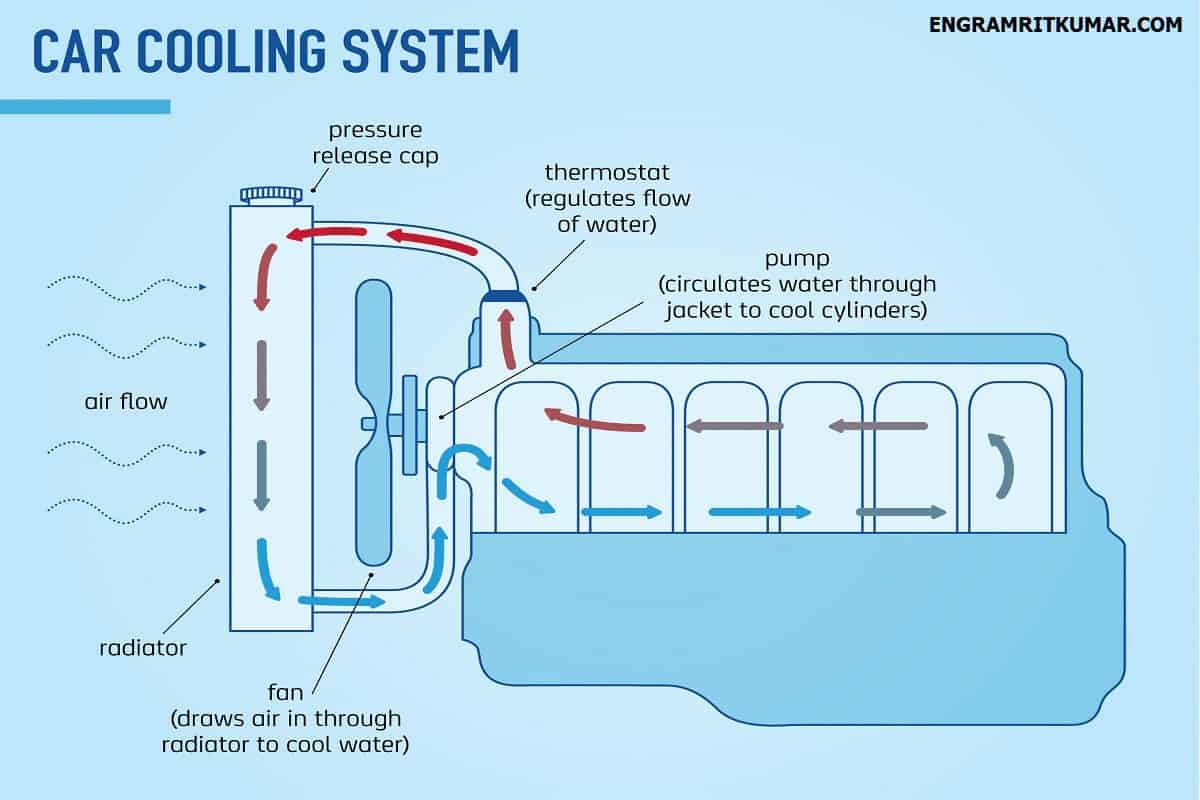
I love these drawings that show airflow as “in” to the radiator, but never show the “out” portion. The assumption that it somehow flows out from under the car is wrong; more specifically, it used to be true, but no longer. There’s a big blob of sticky air under modern/lower cars, and if you have lowered yours, it is messing with the cooling system.
My 1960 American, a very tall car, easily 8 – 9 inches of room underneath (it can drive over parking lot curbs), cools just fine; radiator outlet temperature is 40 to 60 degrees lower than the inlet. My roadster, a highly modified 1961 American, would do 40 degree drop, average-best, and it’s got six inches of clearance. When I did explicit air flow modifications which included a few square feet of ventilation to the hood, I get 80 to 100 degree temperature drop from the same cross-flow radiator, no other change. Under ideal conditions it has achieved 120 F temperature drop, top to bottom. No one ever talks about air flow! Getting air out from under the hood after it flows in helps dramatically!
Many thanks to David Tracy for the discussions of cooling system design.
Engine operating temperature
To remove heat, the radiator relies on the temperature difference between inside (coolant) and outside (air). A high heat load (climbing a hill) in winter is not a problem because the difference is high (cold air outside); conversely hot weather decreases the inside/outside difference, as is intuitively obvious.
The AMC-recommended operating temperature/thermostat rating for this engine is 195 degrees Farenheit. Lower temperatures worsen cooling system problems by lowering the temperature difference, lowering the radiator’s ability to shed heat — the exact opposite of what most people think.
Coolant pump
The coolant pump is nicely ordinary and reliable. New ones are not available, and in the 2020’s parts-store rebuilders sell junk: send your pump, or a spare acquired for that purpose, to a reputable rebuilder such as AG Rebuilders in Massachusetts (formerly known as Arthur Gould Rebuilders). There are others, such as Egge Machine and Water Pump Man. Some auto parts stores, usually NAPA, can have them sent in to be rebuilt as well. If you routinely make long trips with your 195.6 powered car it is advisable to carry a spare water pump. It’s one of the few things you can’t simply get overnighted and expect to get the right one. Most other wear parts can be had within a couple days, overnight delivery or locally sourced.
This is another component that AMC made seemingly arbitrary changes to — part numbers. There are various part numbers, I can’t tell what most of the differences are. If you shop for used water pumps the things to watch for are:
-
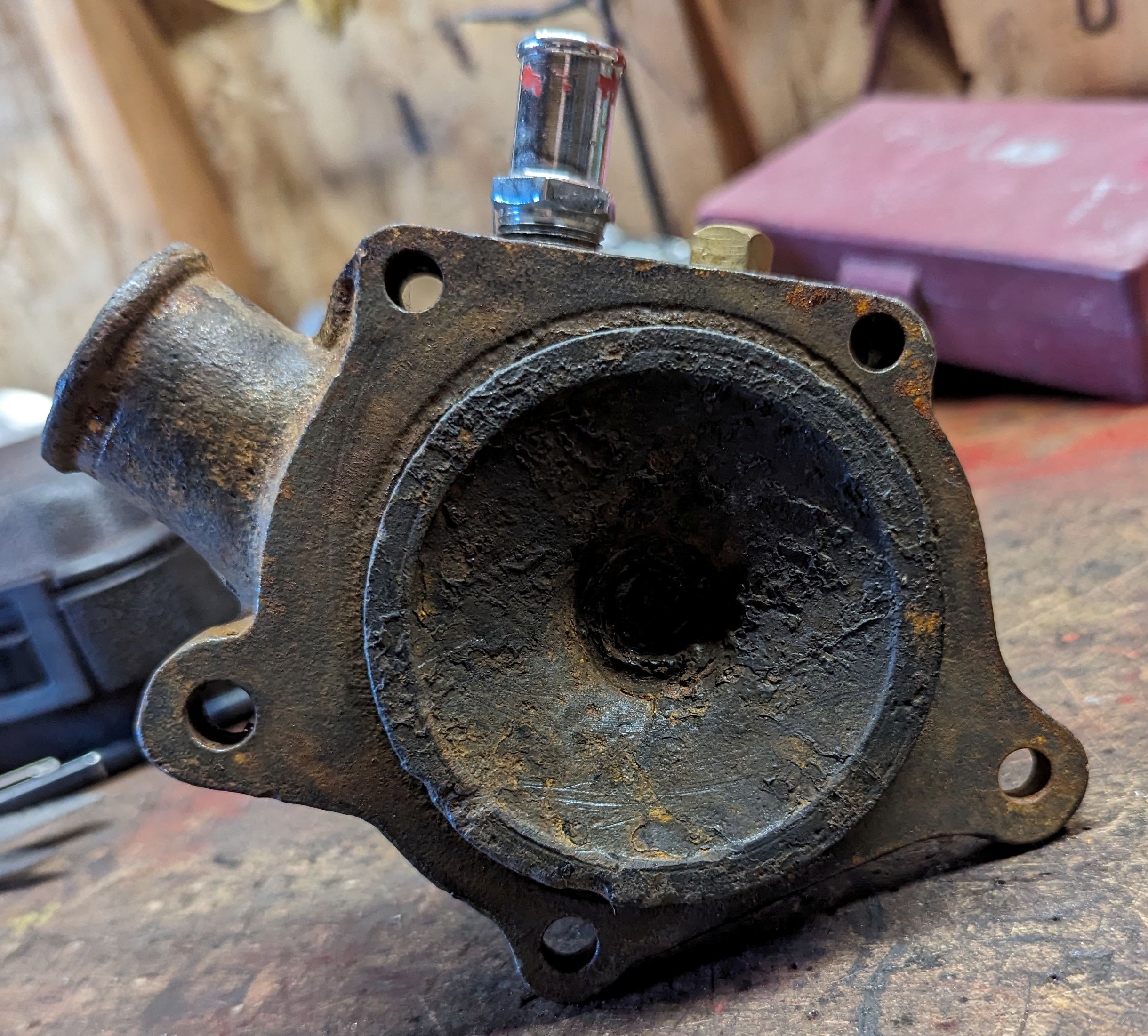
- The bolt pattern. The pump you want takes five bolts, the aluminum engine pump take four. eBay is saturated with aluminum-engine pumps, new and cheap. That’s because the aluminum engine was a disaster, few survived to even the 1970s, so spare parts were never used. They did hold up under light use and good maintenance, but few took great care of a 5-10 year old cheap used car in the 1970s.
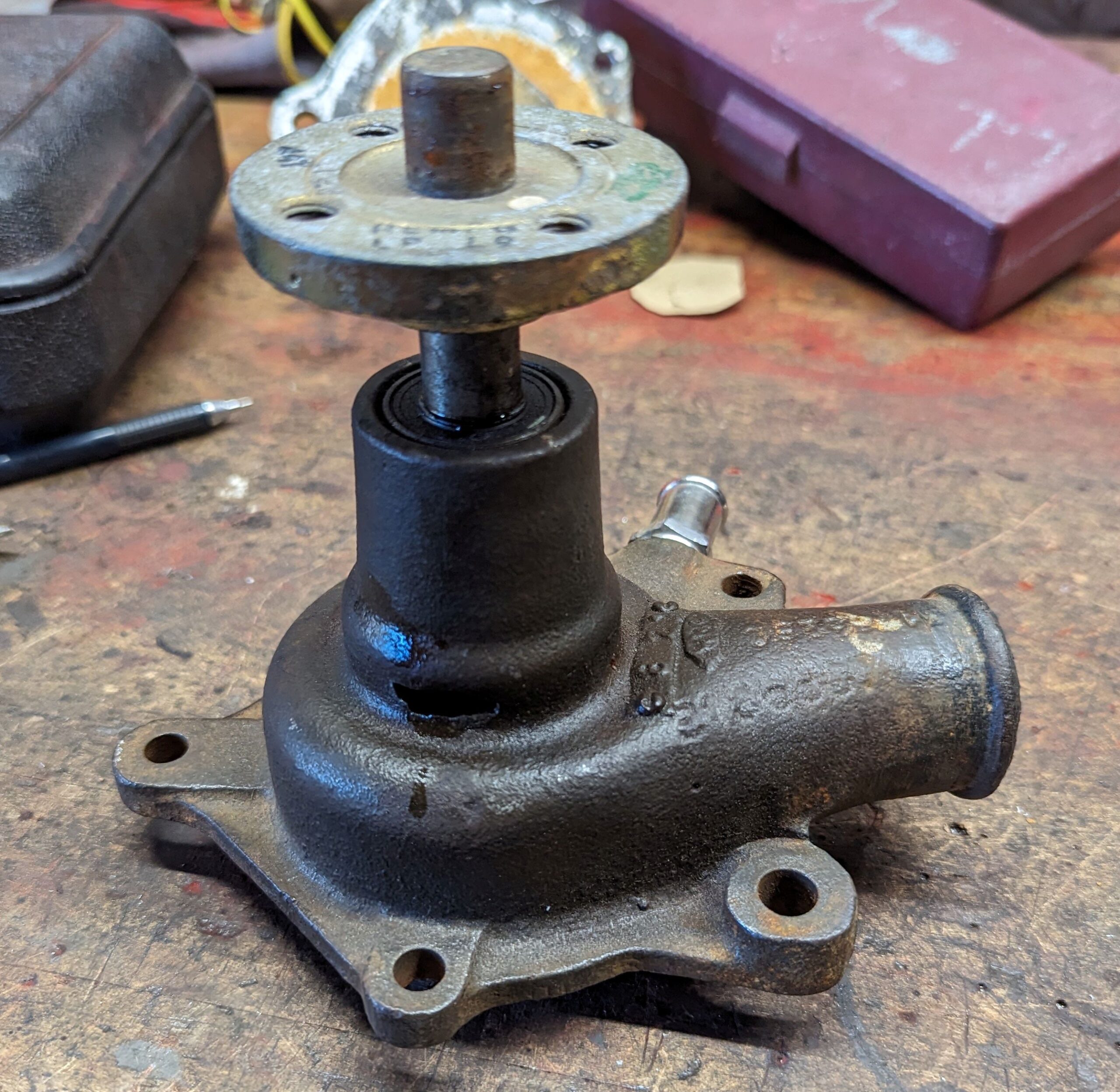
- The large inlet’s angle relative to the block. I don’t have a known pattern for you here, but there are variations (car chassis dependent) to watch out for. A few or dozen degrees difference would be fine. You might be able to make a “wrong” one work, but it may take a different upper radiator hose.
- One or two 1/2″ NPT inlets in the top. All pumps have one for the heater hose connection. The 64 and 65 engine water pump has two, one pointing straight up to the thermostat pod in the head casting, which has a matching 1/2″ NPT port to accommodate a short hose between pump and head — this is the engineering fix to recirculate coolant and prevent cold-start problems described elsewhere. Most aftermarket replacement pumps have both, because the later engine’s coolant pump fits and works perfectly, with a plug in the extra hole.
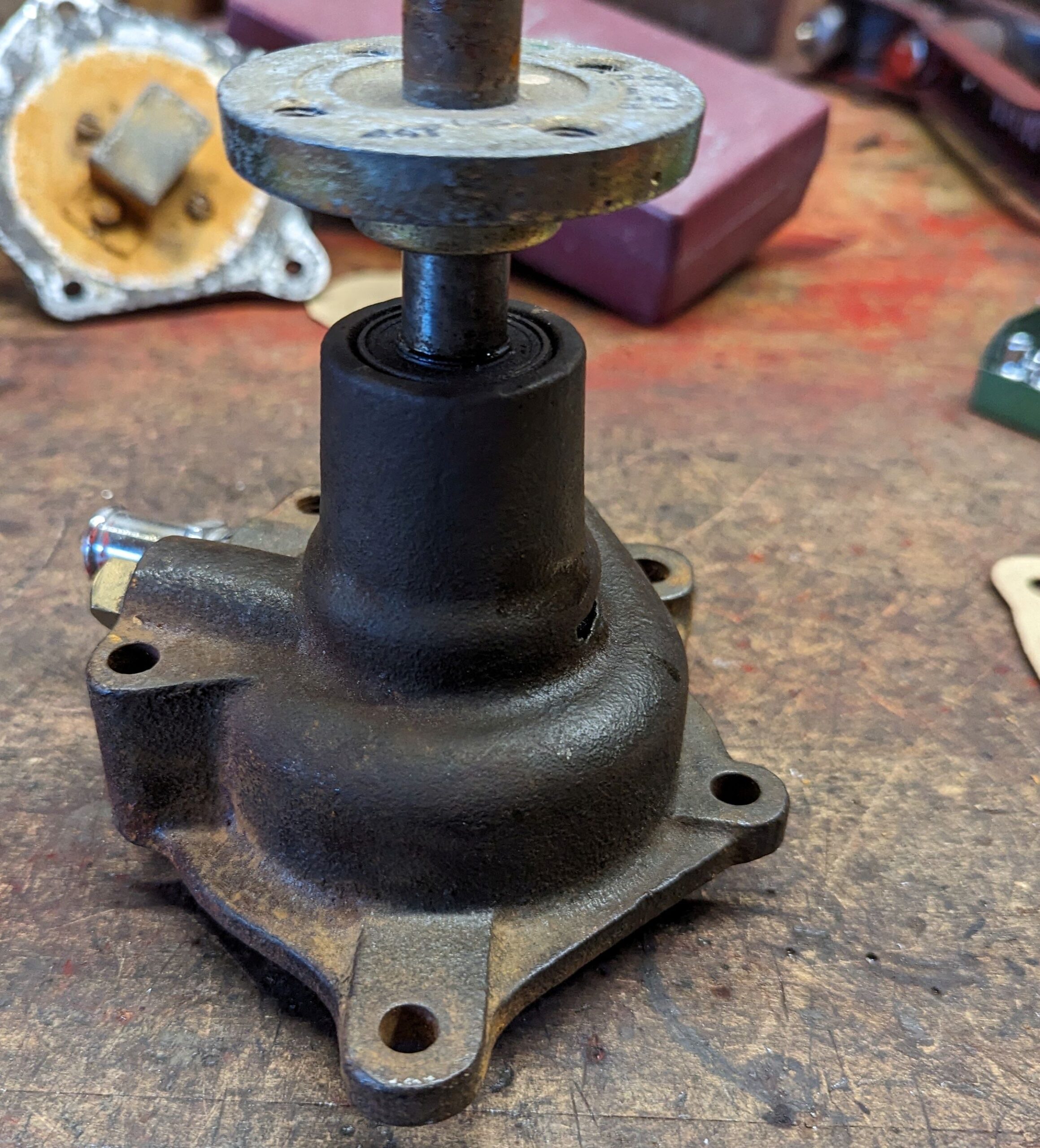
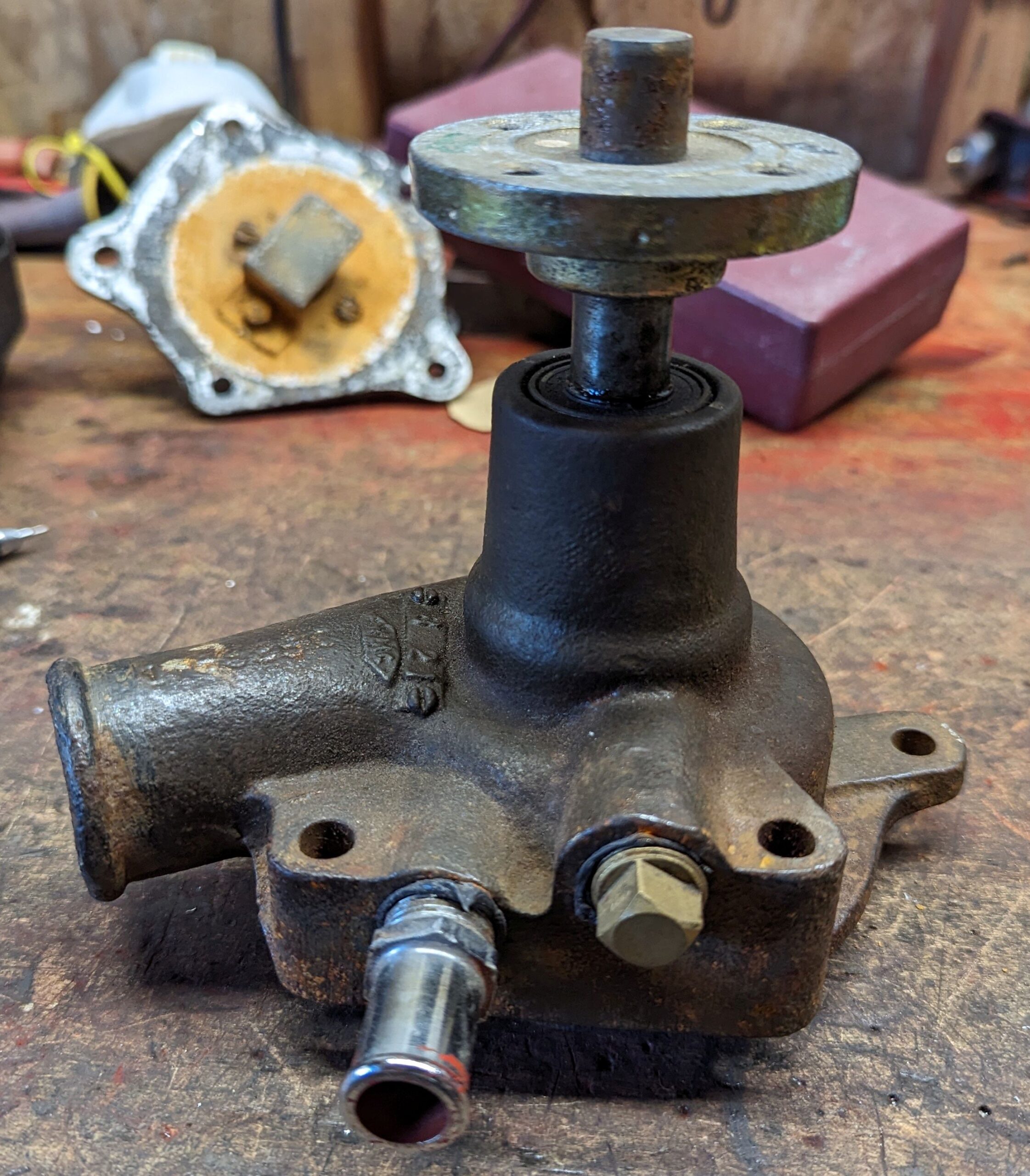
- If you buy a used (eBay etc.) water pump and intend to have it rebuilt, you do not need to worry about base-to-fan height! You can specify to the rebuilder what height you want. That’s it though, just base to fan-flat height. Turns out that replacement bearing and shaft assemblies come in standard sizes, and the fan flange can be pressed to pretty much any height. This hugely improves the availability of pumps. The pump below was about 5.5″ tall when I found it, and had Arthur Gould Rebuilders make it 5″ height. 1958-63 Americans use a shorter shaft water pump than the big cars. I’m not sure about the 1964-65 models.
- For the record — since my main focus is on keeping these engines running and on the road, and not originality — pump shaft length varies with car chassis and engine options (A/C, heavy duty, alternators, power steering, daily weather). These pump variations all have their own part number so fussbudget restorers, who probably aren’t reading my barbaric advice anyway, should know.
Here’s a few photos of a pump I had rebuilt in 2023 for my in-car spare. I had the input shaft shortened and fan flange set to the height I needed.
Radiator and fan
If you are sticking to a stock or restored system, be warned that you will have to modify your behavior and expectations to drive the car. With a good clean stock radiator and stock fan, it will run hot in stop-and-go traffic and climbing long hills, but will cool adequately otherwise. If this is the case jump ahead to the Coolant section.
All of my cars are drivers or daily-drivers. I expect and get modern levels of reliability. Today this is not hard to do.
I’ve given up on brass radiators; they are twice as much money and a whole lot less cooling capacity, like nearly 50 percent less. They are terrible at removing heat unless new or recored. It’s hard to find a real radiator shop nowadays that can rebuild a brass radiator, and they usually charge a premium to do so. If you’re restoring that’s just what you have to do.
I buy the largest radiator that will fit, currently the very-inexpensive oven-welded aluminum radiators from eBay. I’ve never experienced the horror stories of aluminum radiators recounted by many car folk; see the Coolant section. The eBay radiators, from various vendors, are claimed “universal AMC”, usually have “407” in the part number, such as CC407. and indeed fit most AMCs. Frank has found that most AMCs do indeed use the same core size. Early 60s stock six cylinder cores are generally about an inch and a half shorter than V-8 cores, but later in the 60s the cores were changed to the same taller version.
My 1960 American required re-drilling the four mounting holes to raise the radiator by 3/8″ to clear the front motor cross-member; too high and it hits the hood. Your specific car may require drilling new mounting holes in the flange also. These radiators are generally made to fit the most popular models right out of the box — namely the Javelin and AMX.
The “407” radiators have very large cores, and three or four rows of tubes. Under no circumstance does coolant temperature in my cars rise over 200F (with 195 F thermostat), and my usage includes multi-thousand-mile road trips in summer in deserts and over 5000 – 7000 foot mountains. I even made the trek in my roadster from California all the way to the east coast and back for the 2018 Hot Rod Power Tour (Kentucky, Tennessee, Alabama, Georgia, South Carolina, North Carolina — 1200 miles total. Yes, I did the full “long-Haul”).
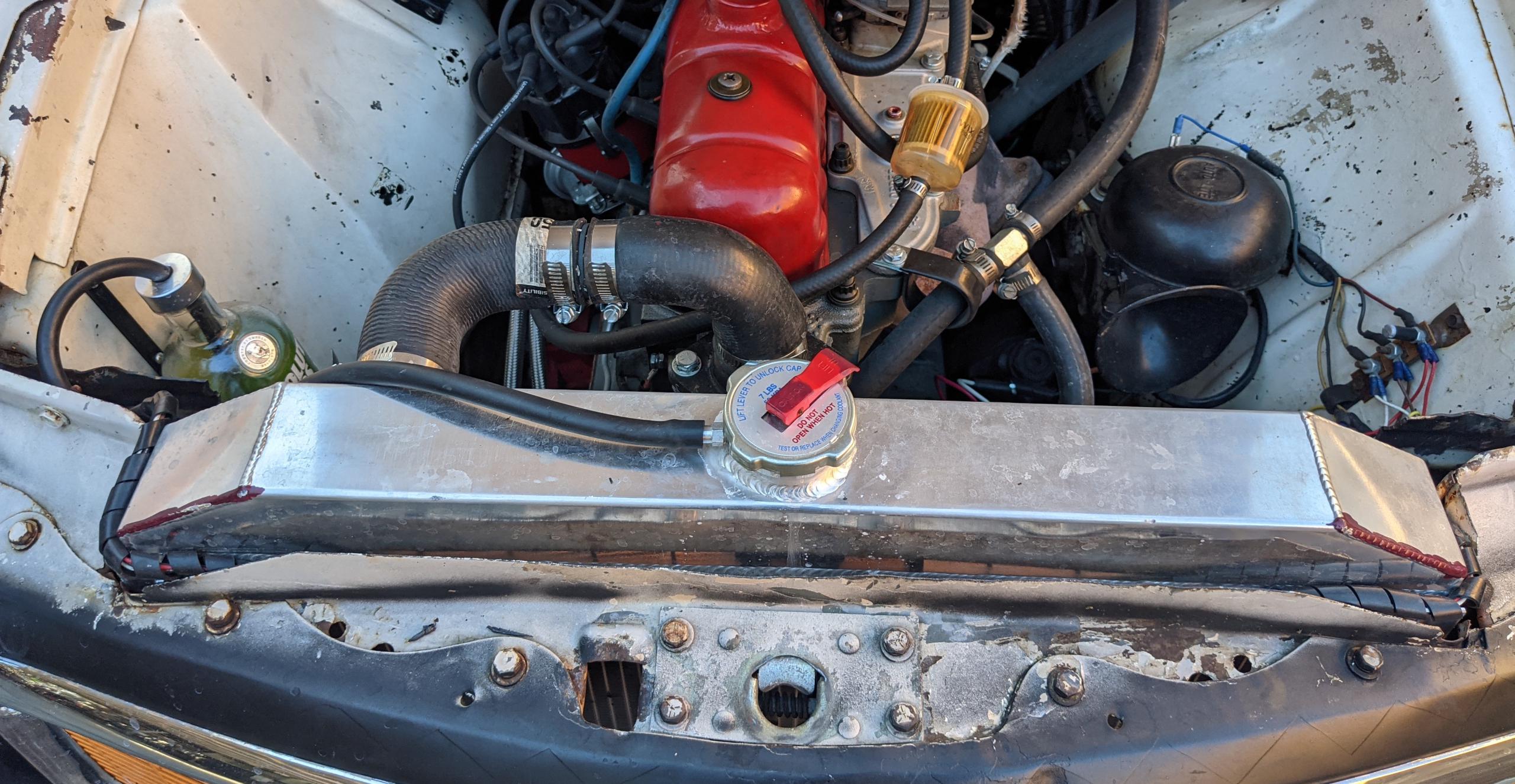
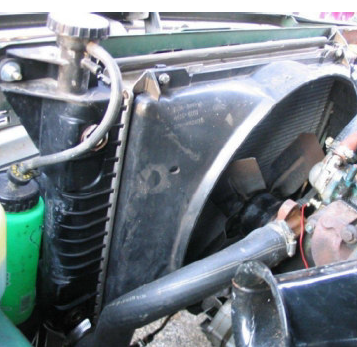
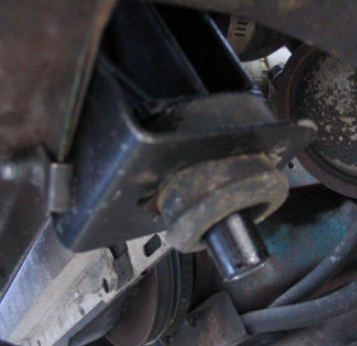
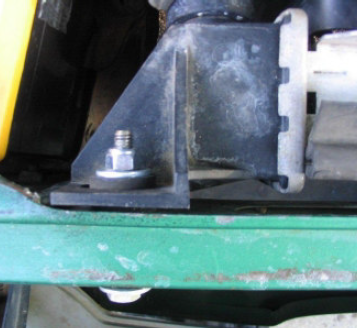
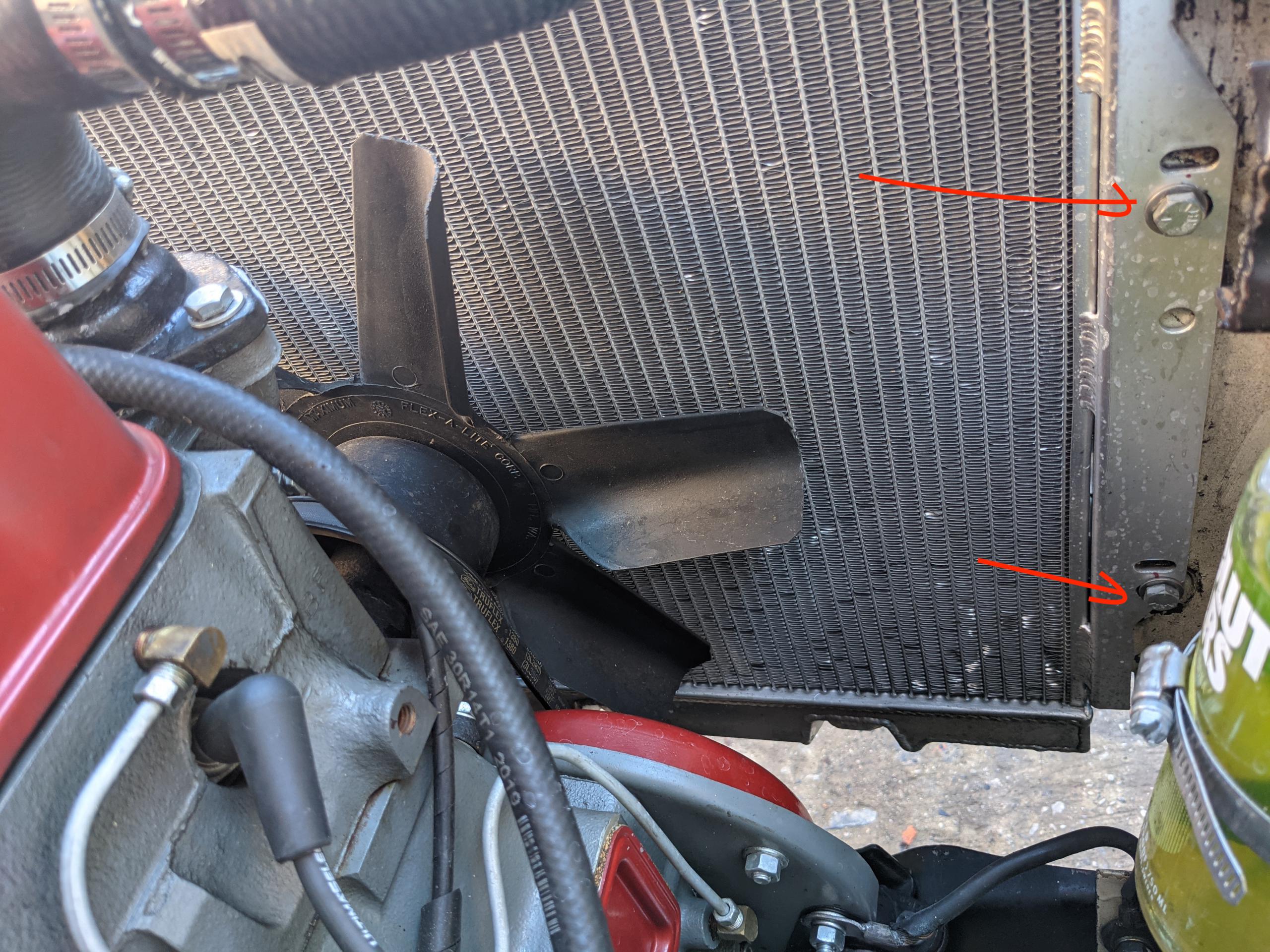
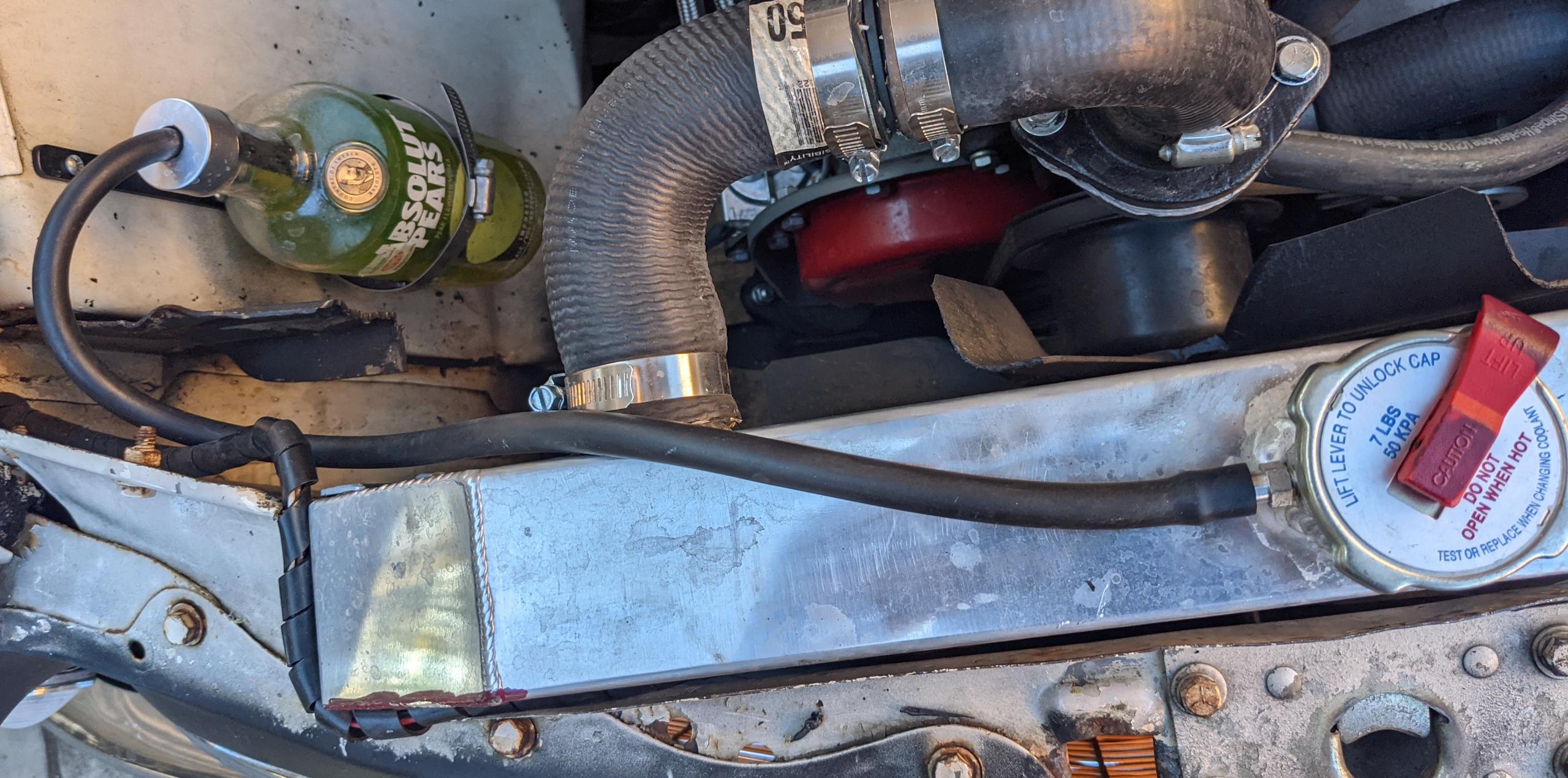
Some have resorted to installing modern radiators. This takes more work for mounting, but for a driver may be acceptable. The photos below show a Ford Aerostar radiator in a 1967 Rebel. Upper right is lower mounts, bottom is upper mount. Frank has a late 1990s Chrysler LHS A/C condensor in his 63 Classic. The cross-flow design is much more efficient than older styles.
Cooling fan
The little four bladed factory steel cooling fan is a joke. It barely moves enough air for normal driving. Get stuck in traffic for any length of time and engine temperature will start to rise dangerously. It is also heavy and unbalanced, and the wobble probably wears the expensive water pump’s bearings out prematurely.
I run nylon plastic fans, 14″ Flexalite or Summit Racing brand. They are inexpensive (under $25), absurdly light, and move a hurricane of air at idle. They also aggressively flatten out at speed, reducing engine load. They move enough air that no shroud is needed. No contest here.
Some installations seem to need a 1/4″ spacer, or to clip the corners off the blades with shears. Once done they last forever.
Electric cooling fans are also an option. See the electrical section for an article on using the popular Ford Contour fan setup. This will be tight on the small 58-63 American, maybe too tight, but works well on all other AMCs.
Coolant and overflow
I am embarrassed to admit that it was only relatively recently that I got rational with coolant. To “save money” I would buy concentrate and dilute with hose water. I topped off radiators (then later, overflow bottles) with tap water. Coolant lasted a couple years, maybe, and would be soon cloudy and darkened with rust. This is bad practice.
Mineral content in tap water, perfectly drinkable and sometimes added for flavor, are electrically active ions and the medium for electrolytic corrosion in cooling systems. Use only distilled or deionized water in cooling systems. This is the key to longevity.
I got rational when I switched to aluminum radiators, and did some research. Pre-mixed coolant is pre-mixed with deionized water; this, and actually correct cleaning and flushing, eliminates all coolant-related problems. The Dexcool in my roadster, with its iron engine and aluminum radiator, is now (2023) seven years old and still clear orange. The green stuff in my 1968 American, two years old, was similarly clear and clean when I sold it last month.
When I do need to clean and flush (I break in new engines on hose water, it’s only in there for a few hours) I use hose water and cleaner as per directions, then drain, and re-fill with distilled water. Run that engine hot, drain that, then install pre-mixed coolant. The distilled water flush eliminates more or less all of of the mineral-laden tap water.
(In a long and heated thread on a forum between folk who swore by using only hose water, and those who swore at them, that the outcome was determined by geographical region; some parts of the country have neutral, mineral-balance/free tap water, and some of us have hard mineral tap water.)
Overflow bottles
It’s the 21st century, please run a functioning overflow bottle. Modern radiators and caps have a suction port and valve to allow overflow, from thermal expansion, to flow into the bottle, and upon cooling, to be drawn back into the engine. This also purges air out of the system, assuming that the radiator cap is the highest point in the cooling system. Also coolant is expensive. And cars puking on the ground is unnecessary and gross.
Design flaw #1: Thermostat location
The pre-1964 195.6 OHV engine has a designed-in flaw that is the source of many reliability and cylinder-head problems. AMC made a design change in 1964 that resolves this, but earlier engines require your intervention.
The flaw is that the location of the thermostat prevents it from easily sensing heat produced in the engine when initially cold. Under common circumstances combustion chamber water jacket temperatures skyrocket, creating steam pockets, until heat “signal” can reach the thermostat, located six inches away, and cause it to open.
A side effect of this delayed signal is loosening of the cylinder head bolts through fairly extreme thermal excursions during cold warmup, the root of the peculiar cylinder head retorque schedule mentioned in the service manual. This is described below in some detail.
Once the engine has warmed enough to open the thermostat the cooling system works fine. The problem is during cold-engine startup; under certain common-enough conditions genuine harm can result.
Detailed analysis of the cold-warmup thermal shock problem
You can skip over this section if you are simply looking for the fixes.
Run any engine long enough, something fails first. On this engine, it is the head gasket. Nash/AMC knew there was a problem right from the engine’s introduction: the technical service manual specifies a 4000 mile head bolt check/re-torque schedule, and with the engine hot. Testing and measurement has convinced me that this is due to head bolt motion, which eventually loosens the bolts. Note that this does not occur on the original L-head design, it’s an effect of the OHV conversion mainly due to the rather massive head and restrictions dictated in order to use as much of the L-head design as possible.
Poor thermal coupling between cylinder head heat and the thermostat is the root cause of a complex stress mechanism. The thermostat is isolated in a pod in the head well forward of #1 cylinder. With the engine “cold” (first start up of the day) block and head are the same temperature. When the engine runs, combustion heat accumulates in the cylinder head. Keep in mind that there is no coolant flowing (thermostat closed), and that the head gasket is a heat insulator. The thermostat, some four inches forward, remains isolated from combustion heat.
The thermostat isolation delays the heat signal from reaching the thermostat. The thermostat can only get the heat signal via conduction/convection, or via leakage in or around the thermostat itself. My measurements show that the delay is so long that the coolant in the hot parts of the head exceed boiling, with audible steam-hammering, before any of that heat reaches the thermostat.
When the heat signal finally reaches the thermostat, and it begins to open slightly, coolant flow moves the now extremely-hot coolant from the upper head to the thermostat, which rapidly opens fully. Cold coolant then flows up into the head from the block and radiator outlet. The hot metal that had been boiling head water when the thermostat was closed is now bathed in relatively cold water.
With the thermostat now open the temperature stabilizes normally. However, this is preceded by cylinder head severe overheat, followed by over cooling, and it is this temperature cycling that causes the head to grow in length (hot) then shrink (cold) in tens of seconds. Metals expand with temperature.
I measured coolant temperatures of over 250F, accompanied by audible steam hammering; at the same time the block remains cool to the touch. I estimate during this time that there is a 150F degree temperature difference between block and head. Assuming 150F difference, I calculate 0.024″ cylinder head length increase (heating) and decrease (sudden cooling) in these first few minutes. The head gasket is a thermal insulator and “lubricant” between block and head.
Given this thermal cycling and expansion/contraction it is not hard to visualize the undesirable horizontal motion of the head bolts. When the head grows in length the head bolts splay out in a “V” with the bolt heads moving apart; when the head and block temperatures equalize, they move back to their correct vertical position. I believe this back and forth motion applies rotational torque and backs out the head bolts. The expansion/contraction is likely bad for the sealing surfaces, contributing to leakage. Accumulated over time this loosens the head bolts and causes the head gasket leaks that are symptomatic of the common end-of-life failures in this engine. If you think this bolt-loosening theory sounds dubious, check out this page at BoltScience.com: the Jost Effect. There’s even a video showing transverse motion backing out a bolt!
Cooling system evolution: early vs late
AMC eventually recognized this problem and modified coolant flow to accommodate this lack-of-thermal-signal issue in the last two years of production.
- An additional inlet was added to the coolant pump.
- An additional outlet was added to the thermostat pod in the cylinder head.
- A short hose connects the new outlet to the new inlet.
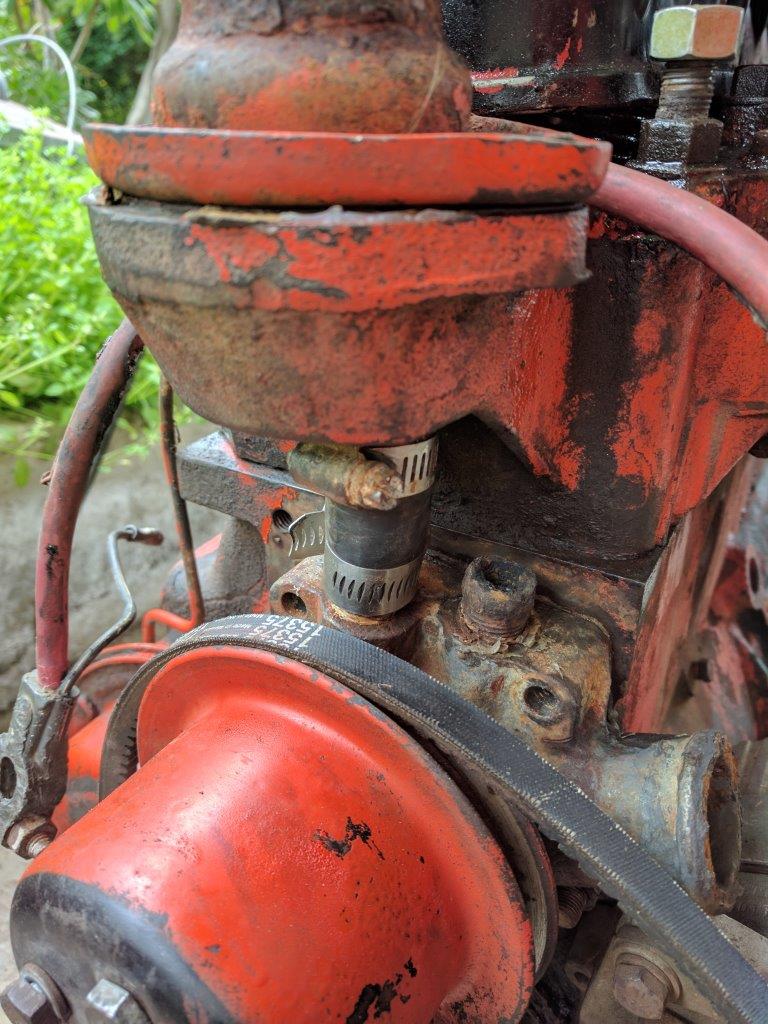
This change, visible in these photos of a 1965 motor, causes a moderate amount of coolant to circulate between block and head at all times, critically during warm-up when the thermostat is closed. This is head-to-block circulation, bypassing the radiator.
(The “new” 199/232 motor introduced in 1964 eliminated this problem by putting the thermostat less than one inch from #1 cylinder’s combustion chamber.)
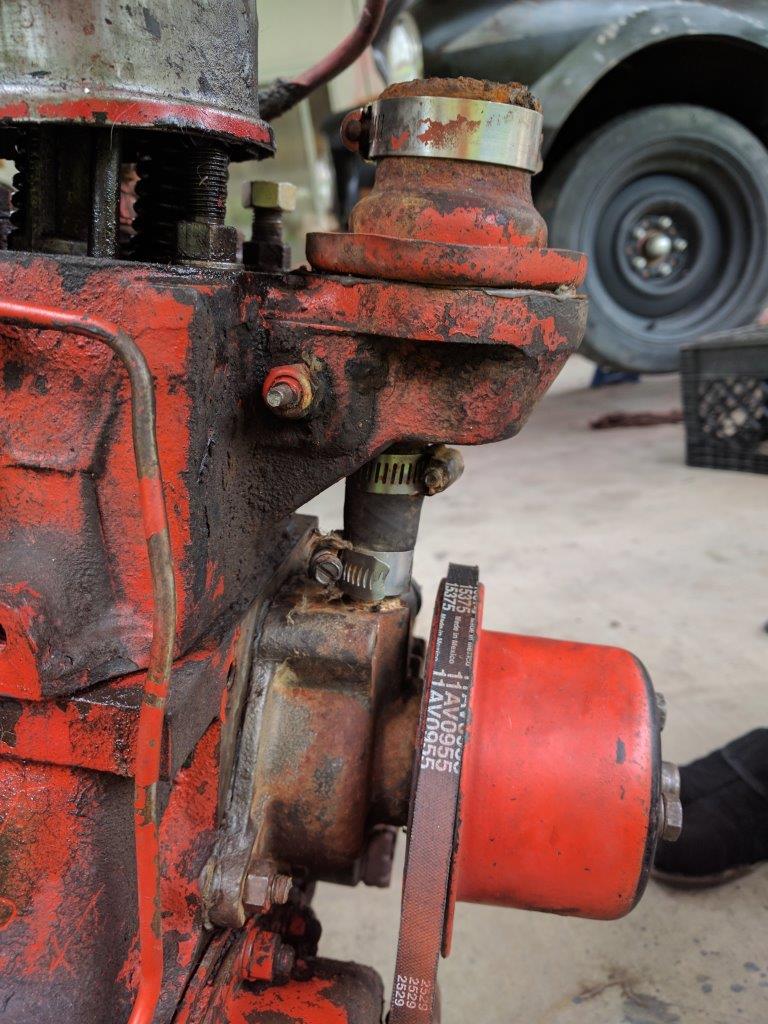
Cooling system fixes
Simplest fix: drilled thermostat
As serious as the cold-startup problem is, the fix is very simple: drill a 1/8″ hole in the body of the thermostat, install the thermostat with the hole towards the front of the car, so that it “leaks” coolant past the thermostat’s copper sensor button.
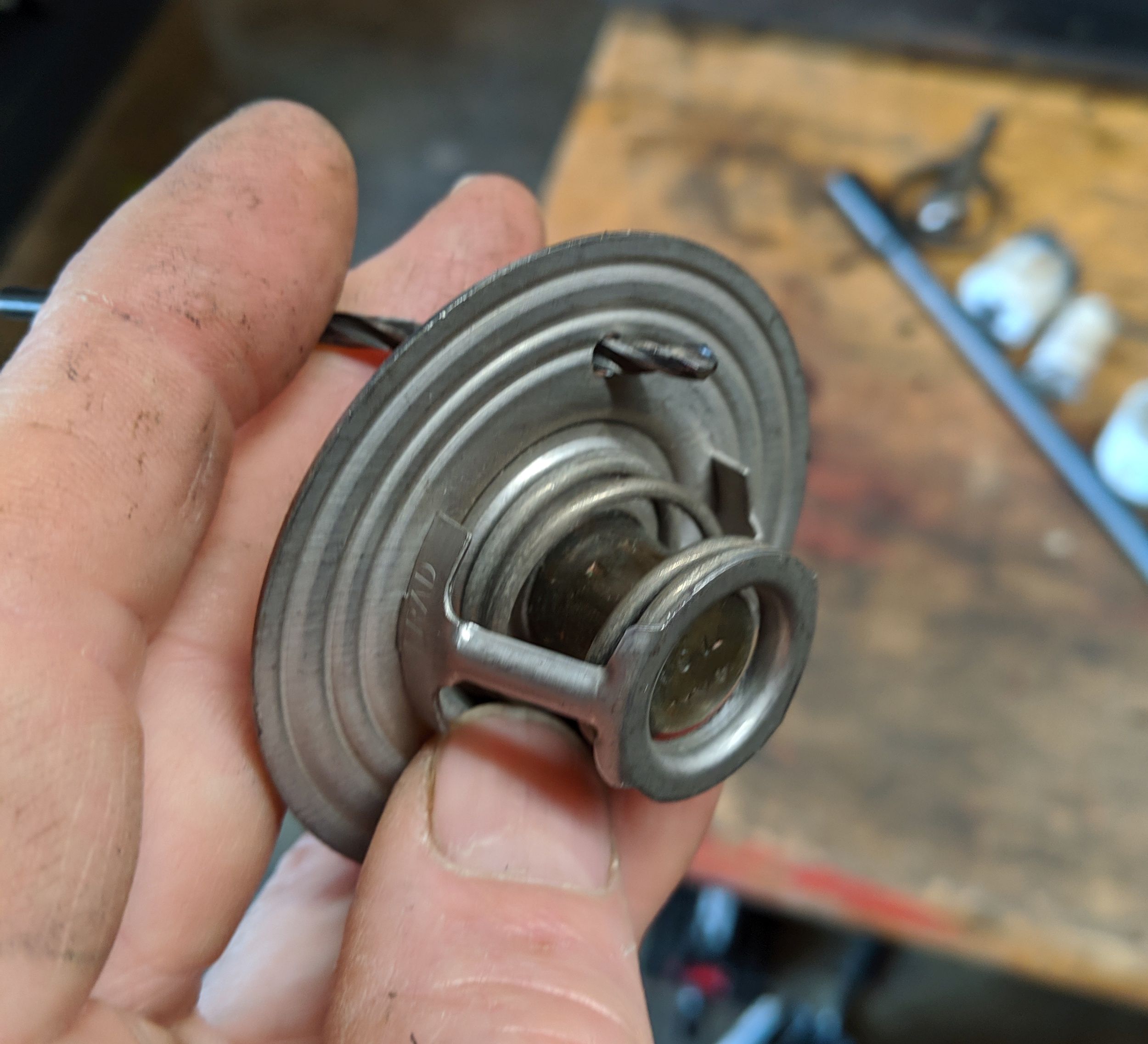
Placement isn’t critical, but the hole wants to be inside the gasket and housing area, and not damage or nick the center portion (that opens; click the photo to see the slightly raised center with the spring inside it).
This small hole does slow engine warmup; there is no need for a larger hole.
This also helps purge air from the system. Newer aftermarket thermostats often have a hole and a loose pin so that crud can’t block it.
I suspect that many thermostat installations leak slightly, by design or by accident. This might explain the disparity in experiences (some have head failures, but many don’t).
Better fix: bypass hose and “tee”
This fix may not be available to you, as it requires the existence of a tapped hole under the thermostat pod, in the head casting. Though that tapped hole is part of the fact 1964 engineering upgrade, I had an older engine that had the hole, blocked with a threaded plug. These days I manually drill a hole in the bottom of the thermostat pod and tap it for 3/8″ NPT and add a 90-degree hose barb.
This fix is a substantial improvement, like the 1964 engineering change it causes coolant to circulate through block and head at all times the engine is running. This does a number of good things at once: heat of combustion, mainly produced in the head over each combustion chamber, is circulated throughout the block, preventing hot spots and ensuring even warmup, something that modern engines all have. Circulation ensures that the thermostat sees the heat signal and helps purge air.
Here is an engine with a bypass hose and tee. The water pump draws/sucks from both hoses, the impeller (in the block) pushes water into the block.
When the engine is cold, the thermostat is closed, and nearly zero coolant flows in the big radiator hose up from the bottom, but the pump pulls coolant from the bypass hose, circulating between block and head.
If you use the bypass method (or a 1964/1965 engine) do not drill the thermostat as in the first fix, above.
Below is a friend’s 1961 American, with a modified unknown cylinder head and circulation using an early pump.
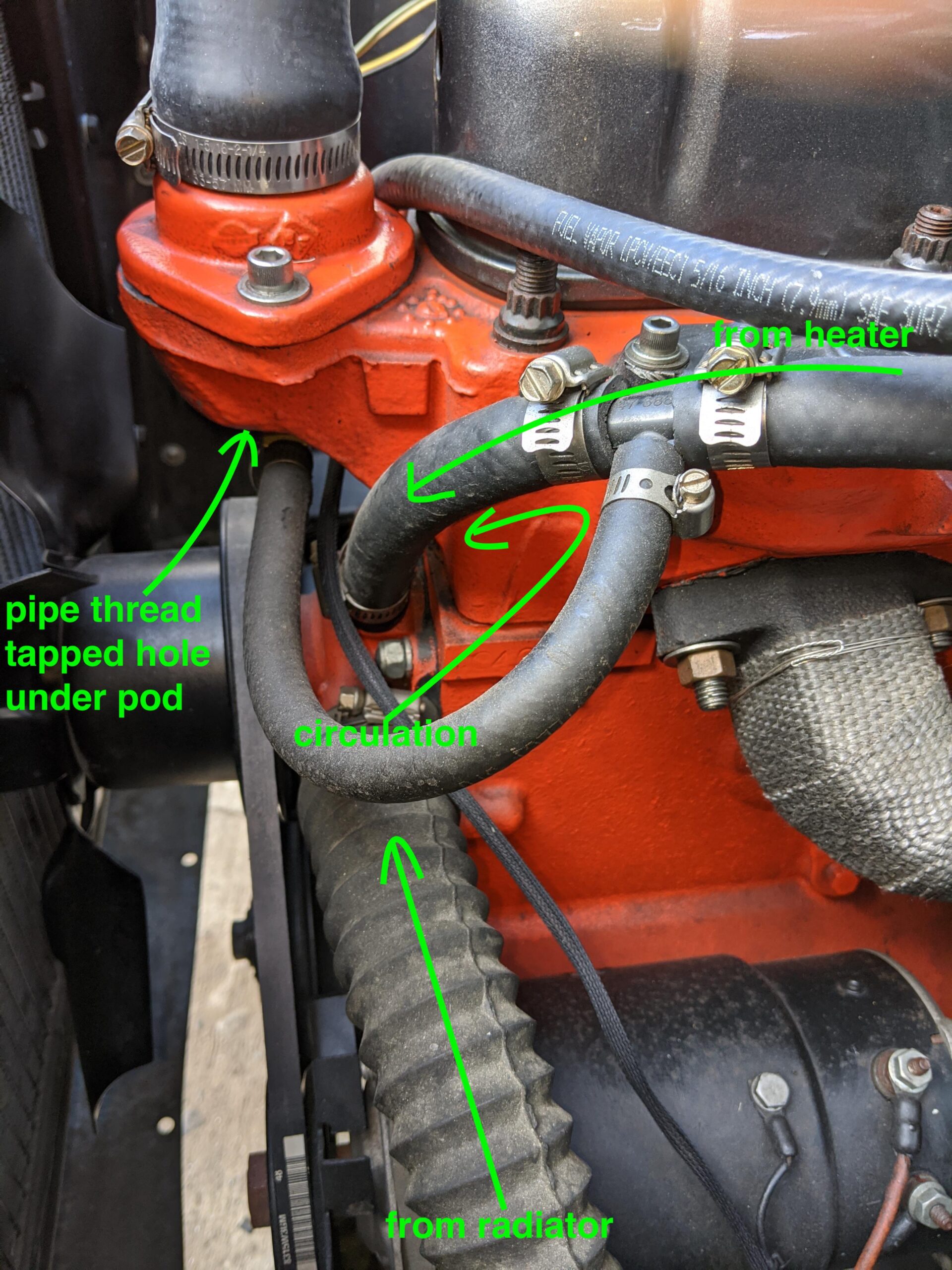
Of course you can always get the 65 water pump then drill the bottom of the thermostat pod for a barbed nipple and run the short hose like the factory did. Installing or replacing that short hose will require removing either the pump or head. It’s something I’d replace every time one of those had to come off just because…
All-electronic cooling system
My roadster has been the test bed for a lot of experimentation on this engine. It has an all-electronic cooling system that uses two small electric pumps (no belt-driven pump, no thermostat) to control engine temperature. This electronic close-loop cooling system is a project unto itself and is described elsewhere.
Website contents, unless otherwise specified, © 2026 by Tom Jennings and Frank Swygert. Permission is granted for personal use with no remuneration. Corporations or any legal organization or their agents (employees or consultants or other relationships) expressly prohibited without written permission.